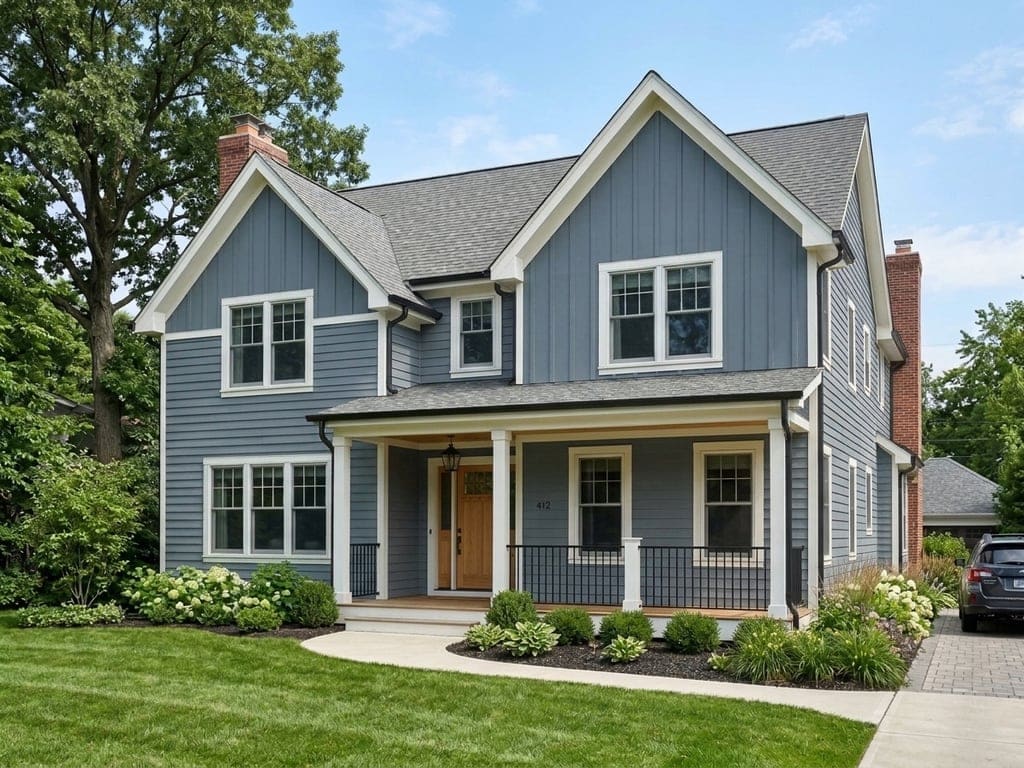
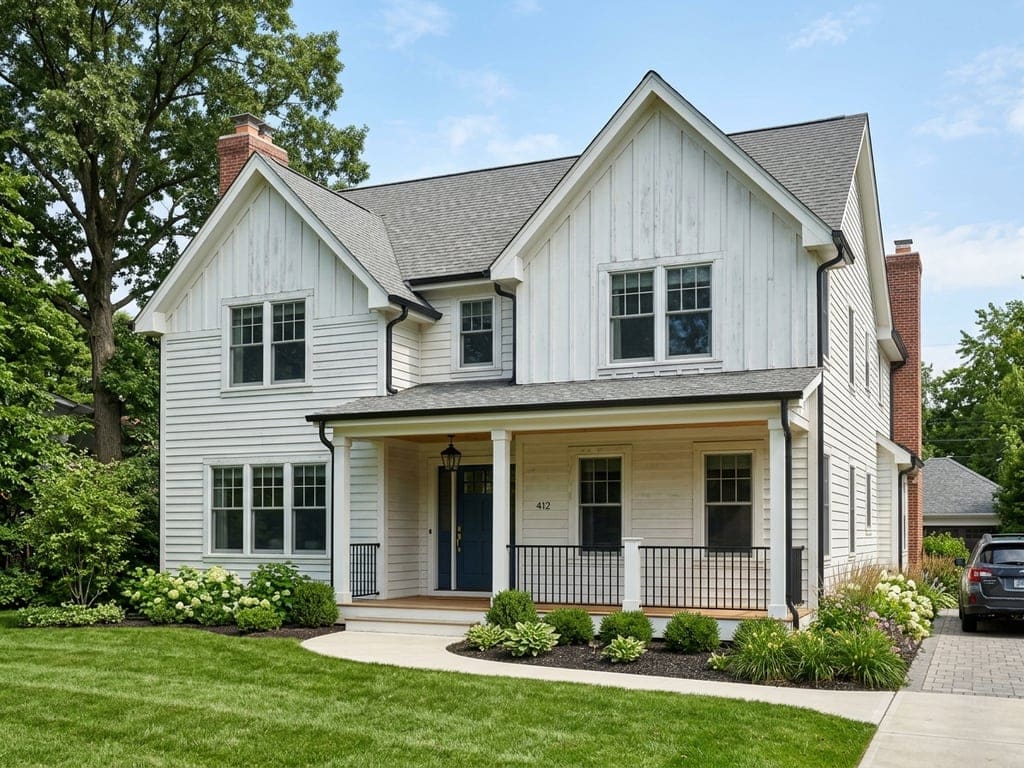
How Daylight Brightness & LRV Guide Every Exterior Paint Color Visualizer Decision
Choosing house exterior paint color from a two-inch paper strip indoors is the fastest way to misjudge curb appeal. Full outdoor sun carries 50,000 to 100,000 lux—roughly 50 to 100 times brighter than an indoor lamp—which shifts mid-tone grays bluer, makes warm creams read stark white, and lightens muted olives by one to two steps across a full two-story facade.
Inside our exterior paint visualizer—plus our exterior paint color visualizer—every architectural color swatch displays its CIE Light Reflectance Value (LRV) on a 0–100% scale. High-LRV whites and chalky limestones (70–88%) reflect heat and expand compact ranches, while grounded mid-to-deep exterior paint like Warm Sage-Olive (24%), Slate-Blue (12%), and Charcoal-Taupe (10%) holds crisp color depth under harsh midday glare.
Substrate physics matters just as much as color harmony. Fiber-cement, wood clapboard, stucco, and mineral brick tolerate deep dark pigments readily, whereas rigid PVC vinyl siding absorbs infrared heat rapidly and can buckle if coated with standard low-LRV dark exterior paint color that lacks heat-reflective tint technology.
- Light Architectural Bodies (LRV 68–88%)
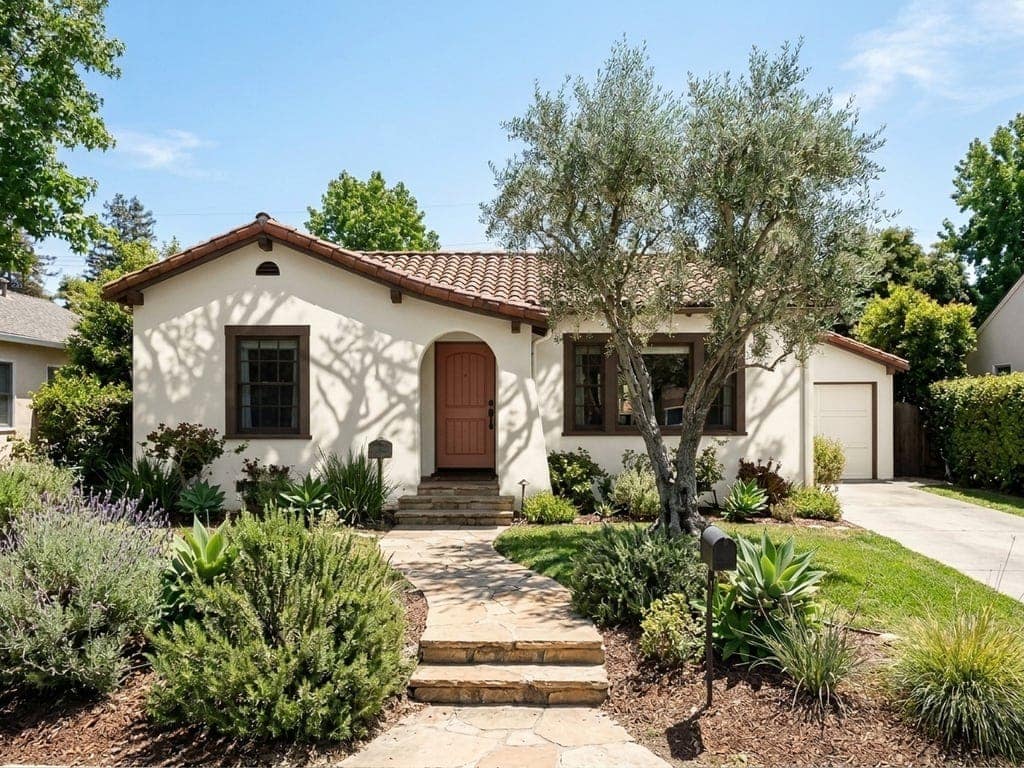
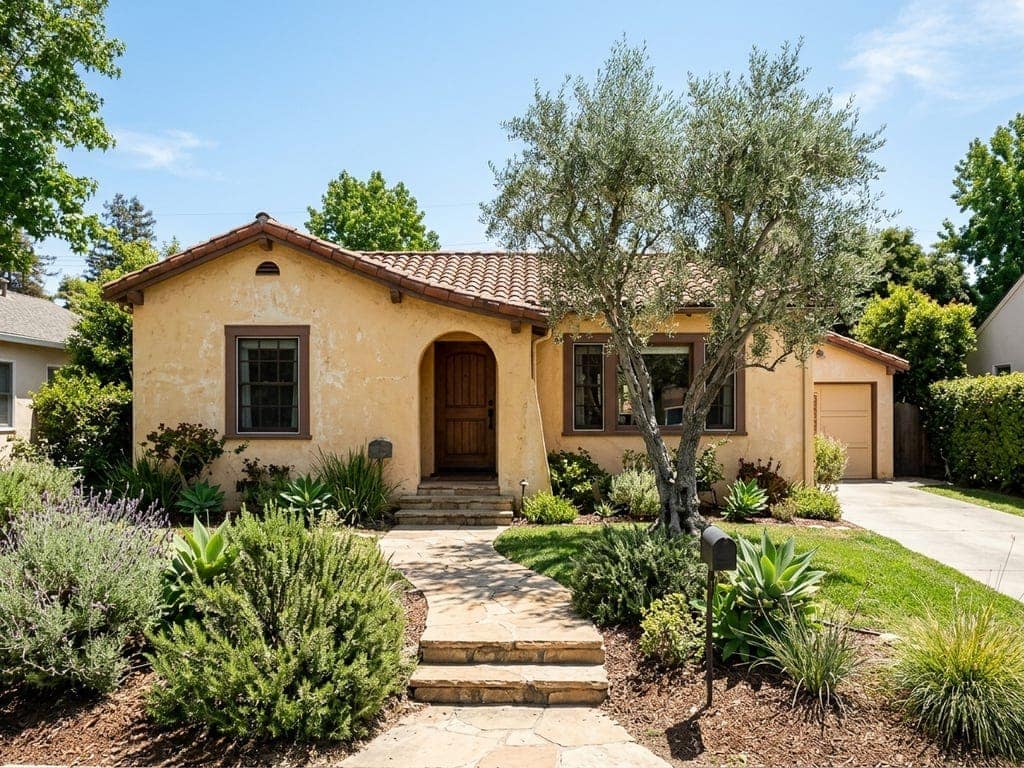
- Swiss Alabaster (88%) and Chalky Limestone (73%) suit stucco ranches, painted brick colonials, and sunny coastal homes while keeping surface temperatures low.
- Mid-Tone Neutrals & Sages (LRV 24–57%)
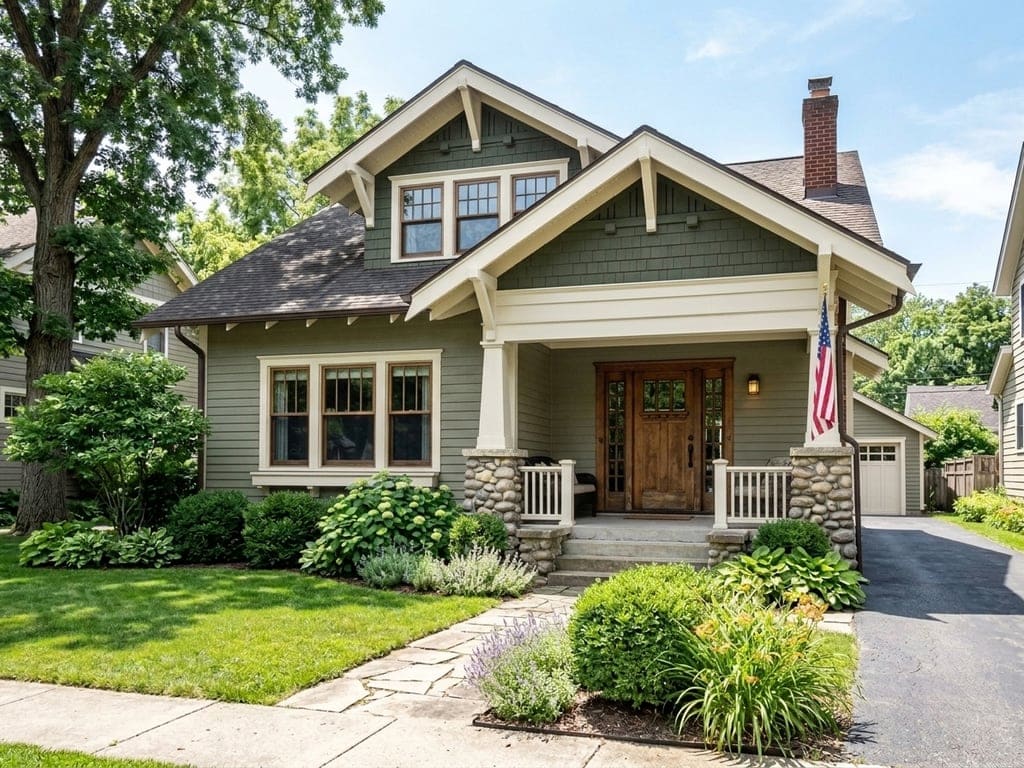
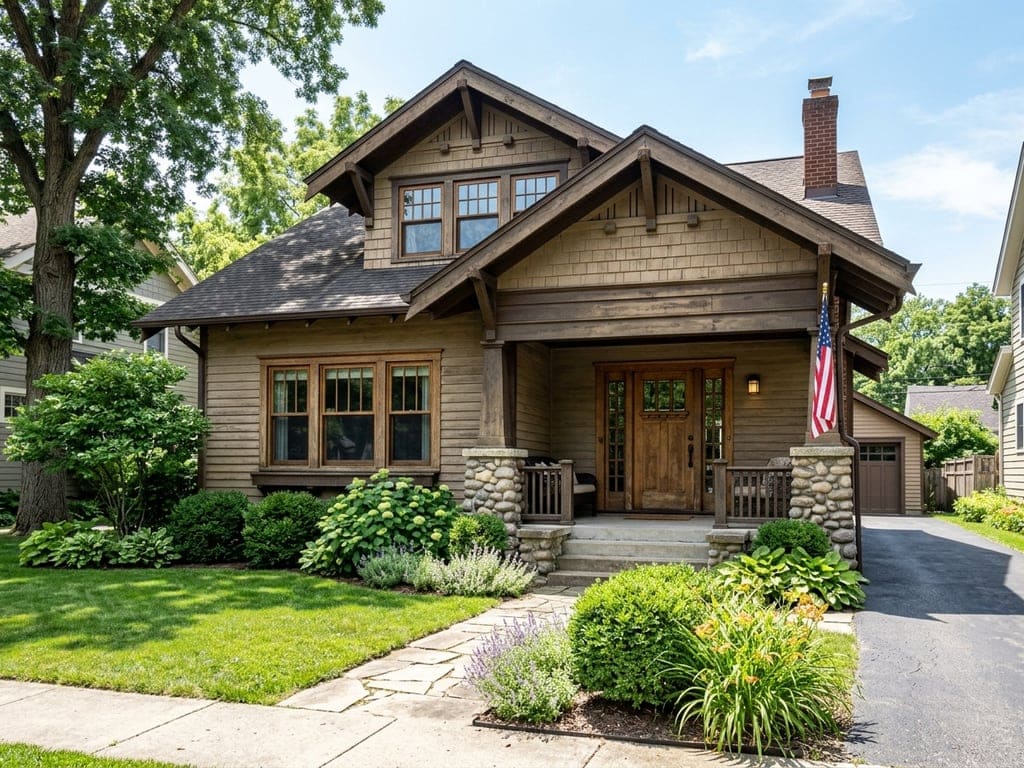
- Travertine Greige (57%), Dry Thyme (28%), and Warm Sage-Olive (24%) hide outdoor dust and harmonize naturally with stone piers, cedar porches, and landscaping.
- Deep Charcoal & Slate Bodies (LRV 5–19%)
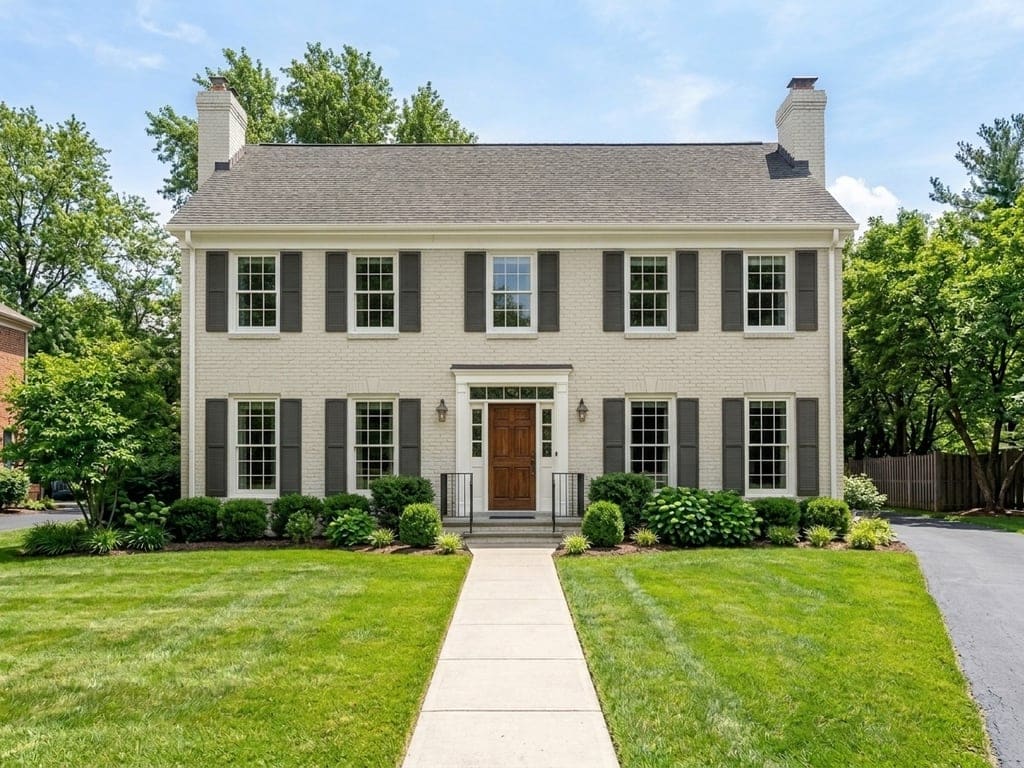
- Architectural Slate-Blue (12%), Charcoal-Taupe (10%), and Forest-Olive (7%) deliver high-contrast modern curb appeal on fiber-cement or wood when paired with crisp LRV 85%+ trim color.
“Rigid PVC exterior siding experiences dimensional thermal expansion under solar irradiance, making solar heat-absorption limits and vinyl-safe pigment reflectance critical when coating exterior profiles.”
Applying the 60-30-10 Rule in an Exterior House Paint Visualizer & House Paint App
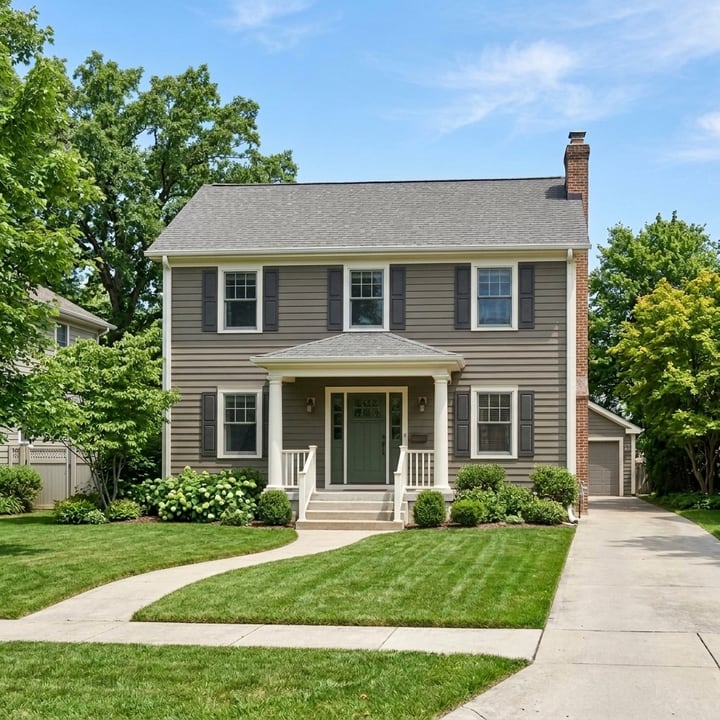
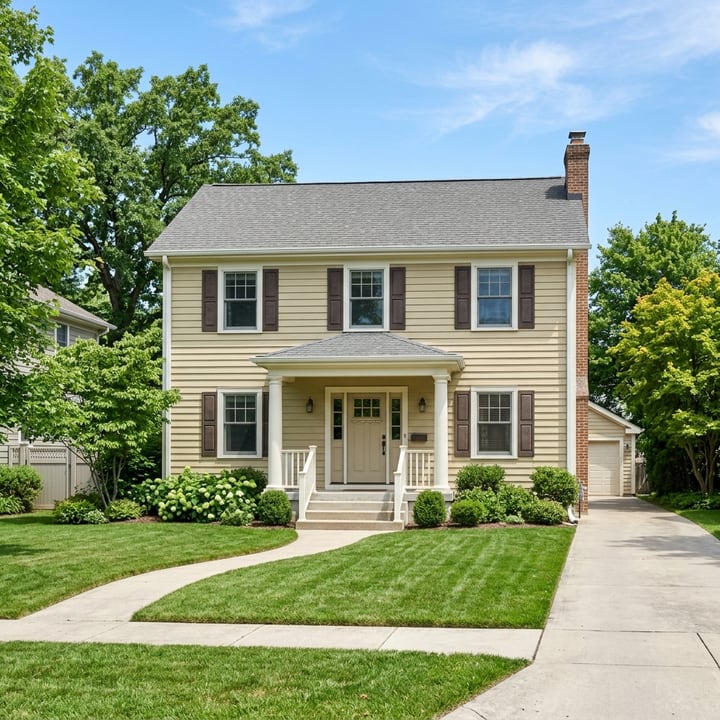
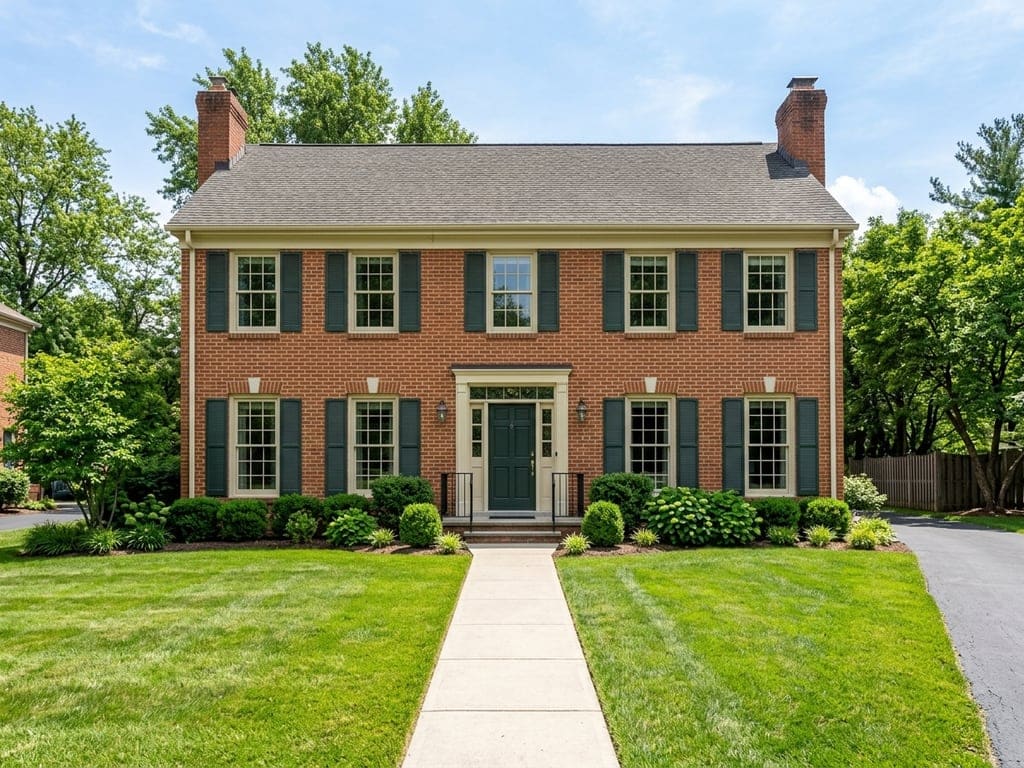
Balanced facades rarely rely on a single flat hue. Architects use the 60-30-10 proportion inside an exterior house paint visualizer to coordinate every fixed and paintable surface: 60% primary body siding or stucco color, 30% secondary trim, soffits, fascia, and garage door color, and 10% focal accents such as shutters and the front entry door.
Before locking color pairings in our exterior house color visualizer, anchor your palette to the permanent elements you are not replacing—asphalt roof shingles, red or brown chimney brick, driveway concrete, and porch stonework. Warm brown-black roofs pair cleanly with Charcoal-Taupe, Warm Sage-Olive, and Creamy Alabaster, whereas cool charcoal-gray roofs flatter Architectural Slate-Blue, Nordic Mist, and crisp neutral whites.
Whether you open RoomPoise on desktop as a browser exterior paint visualizer or outdoor paint visualizer, or on mobile as a fast house paint app and house paint AI studio (or UK house colour visualizer), testing all three color zones against your actual roof and trees catches clashing undertones in seconds.
- 60% Primary Body Siding / Brick / Stucco
- Choose a lower-chroma exterior color (never neon or hyper-saturated) so large sunlit elevations look architectural rather than loud from the street.
- 30% Trim, Fascia, Soffits & Porch Columns
- Step at least 25–40 LRV points lighter or darker than the body color to frame window casings, corner boards, and rooflines crisply.
- 10% Front Door & Shutter Accent
- Use rich Forest-Olive, Muted Terracotta, Midnight Ink, or warm stained oak/cedar on the entry door to pull the eye straight to the front porch.
Matching Exterior Paint Sheen Across Clapboard Siding, Brick Masonry & Stucco
Paint gloss directly changes both perceived color brightness and maintenance life outdoors. Flat and matte architectural exteriors diffuse harsh sunlight and conceal decades of clapboard patch marks or hand-troweled stucco ripples, while exterior satin provides easier hose-down washability on horizontal lap siding and lower porch walls.
Semi-gloss belongs exclusively on high-touch trim, window sashes, exterior shutters, and front entry doors where crisp specular reflections accentuate crisp millwork profiles. For historic clay brick, always specify breathable mineral silicate or masonry limewash rather than film-forming elastomeric paint so trapped wall vapor can escape safely.
When you test an exterior paint visualizer preview—or prompt our house paint AI to virtually paint my house across body, trim, and door—pair your chosen paint color with the right 60-degree specular sheen before requesting contractor bids.
“Measuring specular gloss at 60-degree geometry establishes consistent numerical benchmarks separating flat, low-luster satin, and semi-gloss exterior architectural coatings.”
Free Outdoor Paint Visualizer Canvas vs. AI Exterior Paint Visualizer Credits
RoomPoise keeps exterior facade color previews accessible without forced paywalls. Tab 1 inside this outdoor paint visualizer runs 100% client-side in your browser—letting you virtually paint your house exterior free across unlimited exterior photos, sample exterior color values with the Color Match eyedropper, and save watermark-free PNG comparisons with zero account.
When you need multi-zone rendering (Tab 2) to recolor exterior siding, trim, shutters, and front doors simultaneously with realistic outdoor sun shadows and brick mortar texture, our AI exterior paint visualizer uses depth-locked GPU synthesis. Every visitor can test our 5 built-in sample spaces instantly in the browser without logging in, and new Google accounts receive 40 welcome credits (2 custom 1080p renders, valid 7 days, no card required). Standard 1080p renders cost 20 credits per image, while 4K UHD architectural exports use 40 credits on paid tiers. Studio memberships start at $20/month billed annually ($240/year on Starter, or $25/month billed monthly), $40/month billed annually ($480/year on Pro), and $60/month billed annually ($720/year on Studio).